Remote job vs freelancing: what’s better for you?
When people compare remote job vs freelancing, they are really asking a deeper question: do they want stability with flexibility, or independence with more risk? Both paths can be fully online, both can be done from home, and both can free someone from a traditional office setting. Yet the day-to-day reality, income pattern, and long-term career shape look very different.
This guide looks at remote jobs and freelancing in practical terms: how money works, how time feels, how clients and employers behave, and what kind of worker each path suits best. It also reflects the kind of questions that show up in “Remote job vs freelancing reddit” threads, where real people compare remote job vs freelancing salary, talk about freelance remote jobs, and ask what is freelancing like when it becomes the main source of income.
Remote work, work from home, and freelancing: the basic picture
A remote job is a traditional job done outside a traditional office. There is usually a single employer, an employment contract, and a typical structure of work: job title, regular hours, predictable salary, and often benefits such as health insurance or retirement plans. Remote workers are part of remote teams and report to managers, even if they never walk into a company building.
Work from home jobs describe location more than structure. Some are remote employment roles with full benefits and long-term expectations. Others are hybrid positions where the person works at home part of the time and in a traditional office setting when needed. “Work from home” says where you are; “remote employment” says more about how you are hired.
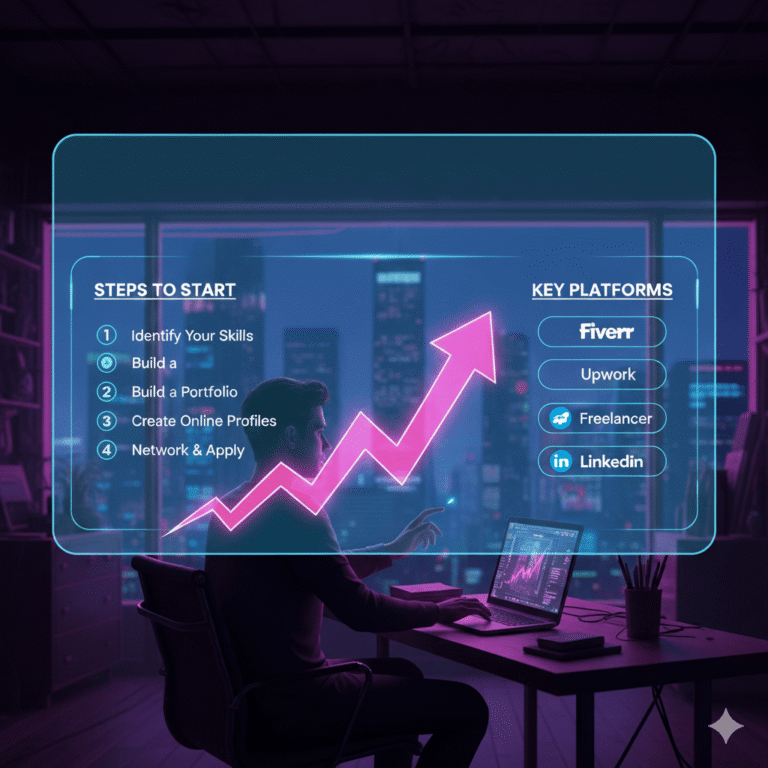
Freelancing is different. A freelancer is self-employed and works on a project basis or an ongoing basis with multiple clients instead of one employer. They might find work on Upwork, through personal networks, or via direct outreach. They negotiate their own rates, handle their own taxes, and build their own safety net. Freelance remote jobs feel similar to remote work on the surface, but legally and practically, the relationship is client–contractor, not employer–employee.
Understanding this difference between remote and work from home and freelancing makes the rest of the comparison much clearer.
Money and stability: how income really feels
Many people look up remote job vs freelancing salary because money shapes almost every other decision. The contrast is not just about how much someone might earn, but how predictable that income feels month to month.
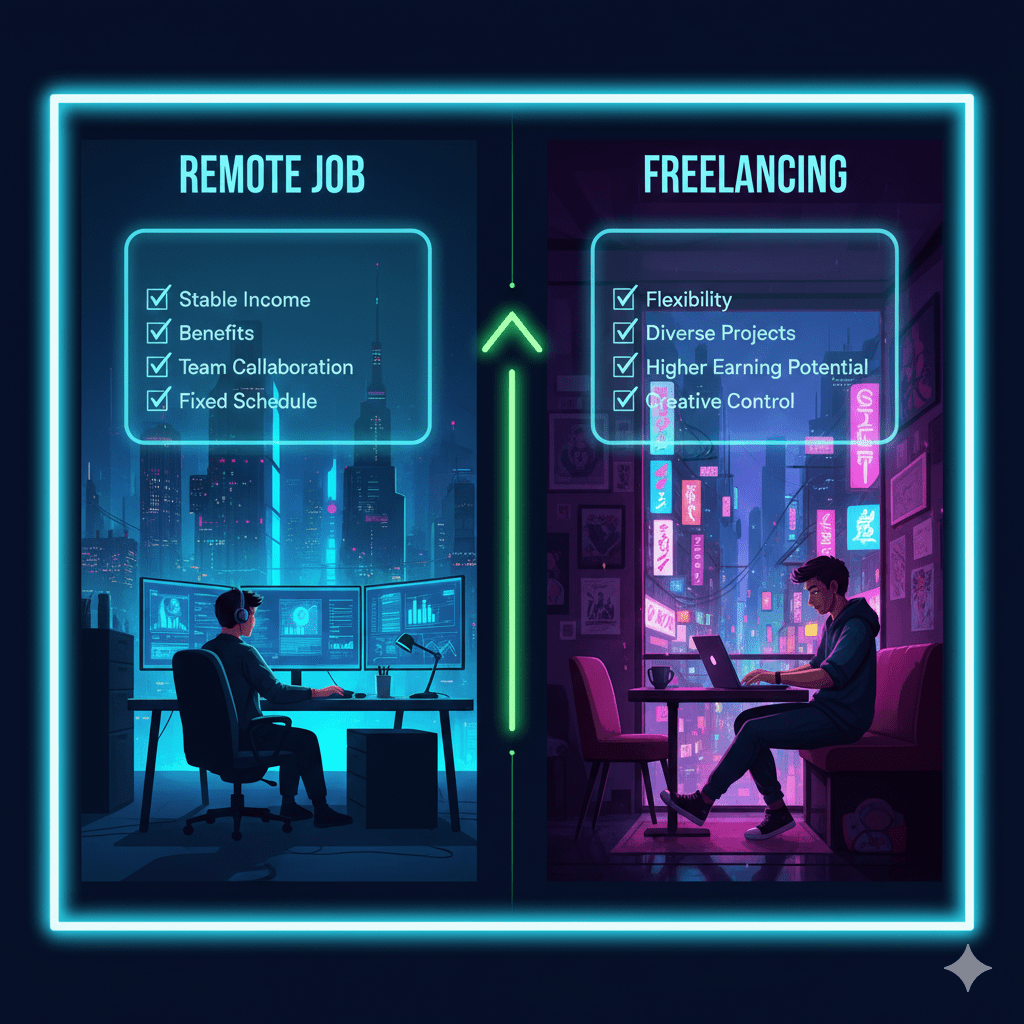
In a remote job, income is steady. A remote employee usually knows exactly what hits the account every pay period. This predictable salary makes budgeting, saving, and planning long-term goals easier. Raises and bonuses might be occasional and slower to arrive, but the baseline is clear. As long as the role is safe and the company is stable, the remote worker enjoys financial stability that feels similar to traditional jobs, just without commuting.
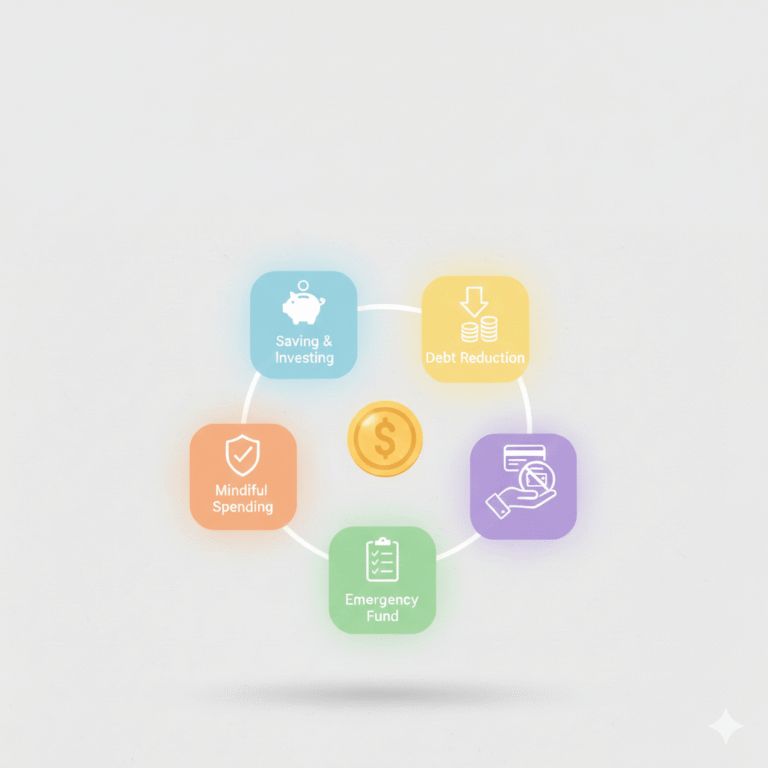
In freelancing, income potential is often higher, especially once a freelancer has strong skills, good positioning, and a reliable base of clients. A freelancer can raise rates, choose better projects, and increase capacity when they want more earnings. At the same time, inconsistent income is common, especially early on. Some months are strong; others are unexpectedly quiet. There is no automatic paycheck, and there is no single employer absorbing the shock of a slow period. Freelancers must create their own stability through savings, emergency funds, and careful planning.
The simplest way to see it is: a remote job offers steady income with less control, while freelancing offers more control with more income risk.
Time and flexibility: who owns the day?
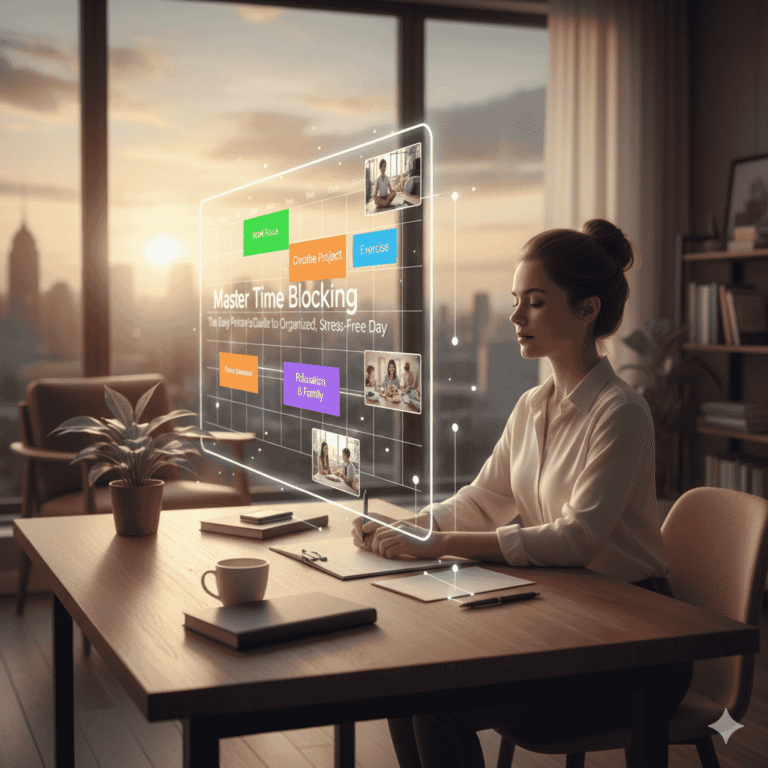
Remote work is often sold as total freedom, but in most remote jobs the schedule still follows the company’s rhythm. A remote worker may enjoy some flexibility—starting a bit earlier or later, moving breaks around, or adjusting hours for appointments—but meetings, deadlines, and team overlaps still shape the day. For many people, this is a comfortable balance: they avoid commuting, yet they still know when the workday begins and ends.
Freelancers technically own their schedule. They decide when to wake up, when to work, and when to rest. They can shift hours around family commitments, travel, or personal projects. However, this freedom comes with hidden weight. Freelancers must fit client calls, project work, revisions, and admin tasks into their day. They may feel pressure to be responsive across time zones, and without boundaries it is easy for work to spread into evenings and weekends.
Someone who enjoys flexibility inside a structured work environment often feels happier with a remote job. Someone who wants to design their own schedule from the ground up, and is ready to defend that schedule with clear boundaries, usually finds freelancing more satisfying.
How work is structured: external systems vs self-made systems
In a remote role, most of the structure is provided by the employer. There are job descriptions, task lists, project management tools, and clearly defined goals. Teams share responsibility, managers decide priorities, and there is usually a sense of what a “good week” looks like. The remote employee contributes their skills inside a larger system.
In freelancing, structure has to be built by the freelancer. There is no central system unless the freelancer creates it. They decide how to onboard clients, how to write proposals, how to schedule work, and how to deliver projects. They keep track of time, invoices, deadlines, and feedback. The freelancer is simultaneously the worker, the project manager, the salesperson, and the support department.
In many remote job vs freelancing reddit conversations, this contrast is obvious. People who enjoy designing their own workflow often thrive as freelancers. Those who prefer plugging into an existing structure usually feel better in remote jobs or work from home jobs with clear expectations.
Who you work for: one employer vs many clients
In a remote job, the relationship is straightforward: one main employer, one salary stream, and one central set of expectations. That employer may serve many customers, work across multiple markets, or manage several product lines, but from the worker’s point of view, there is a single, primary relationship.
Freelancers work with multiple clients. Each one has different expectations, communication habits, and priorities. This spreads risk because losing one client does not end the entire career, yet it also spreads attention. A freelancer might be juggling several projects at once, learning to switch mental context quickly.
This difference also affects emotional energy. Having one boss can feel limiting but predictable. Having multiple clients can feel varied and exciting, but occasionally chaotic. Some freelance remote jobs mimic the feel of a single employer—like long-term contracts—but legally and practically, the freelancer is still a separate business.
Career growth and long-term direction
Remote employment and freelancing support growth in different ways.
In a remote job, career growth is usually tied to promotions, changing roles, or moving to better-paying companies. Remote workers can climb internal ladders, shift into leadership, or transition to specialized roles. They might benefit from internal training, mentorship, and performance reviews. For someone who likes to see clearly defined levels and titles, this structure feels reassuring.
In freelancing, growth is more fluid. A freelancer can shift into higher-value skills, refine a niche, increase rates, target larger clients, or build a micro-agency with other freelancers. There is no official ladder, yet there is room to design one. Income growth is tied to business decisions rather than internal promotions.
Both paths can support long-term careers. The question becomes whether someone prefers systems built by an employer or systems they build themselves.
Benefits, security, and risk
Benefits and security are major points in the remote job vs freelancing conversation.
Remote employees often receive benefits such as health insurance, paid time off, and retirement plans. These benefits may vary by country and company, but they can add a large hidden value on top of salary. Job security, while never absolute, can feel stronger when the company is stable and the role is well defined.
Freelancers rarely receive benefits by default. They must set up their own insurance, retirement savings, and time off. When they take a break, income usually stops. This reality means risk tolerance and financial planning become central. Without a buffer, a slow month or a lost client hits much harder.
If someone places high value on benefits and built-in security, remote employment or even hybrid work from home jobs often make more sense. If someone is comfortable building their own safety net and wants the upside of controlling income, freelancing can still be attractive.
Autonomy and control over work
One of the strongest arguments in favor of freelancing is autonomy. A freelancer chooses which clients to work with, which projects to accept, and which markets or industries to serve. They can turn down offers that do not feel aligned with their skills, rates, or values. They can change direction when a new opportunity appears.
Remote workers also enjoy autonomy, especially in modern roles where remote employees are trusted to manage their time and output. However, they still operate inside the decisions of a single employer. Projects and tasks follow company priorities. Strategic direction, branding, and customer decisions are made by leadership, not by the individual worker.
As people compare remote job vs freelancing vs freelance, autonomy often tips the balance. Those who want high control over what they do and who they serve lean toward freelancing. Those who value influence but are comfortable sharing control with a team lean toward remote jobs.
Daily reality: freelancing beyond the highlight reel
From outside, freelancing can look like pure freedom: laptop, coffee, flexible hours. The daily reality includes a lot of unseen work. A freelancer might spend only part of the day on client projects. The rest goes into writing proposals on Upwork or other platforms, answering messages, negotiating scope, tracking expenses, sending invoices, learning new skills, and planning the next month.
There is also emotional work: dealing with slow-paying clients, changing requirements, or quiet weeks where new projects are harder to find. Inconsistent income is not just a financial stress; it can also weigh on motivation.
For people who enjoy building something of their own and like the feeling that every effort has a direct impact on earnings, this broader workload feels worthwhile. For others, it feels like too many jobs in one.
Daily reality: remote work beyond the marketing page
Remote work also has a more complex side that does not always appear in job ads. A remote worker may enjoy not commuting and having more control over their environment, yet they still navigate meetings, performance expectations, and office politics—just through a screen instead of a hallway.
Some remote teams offer high trust, clear goals, and healthy work-life balance. Others struggle with unclear expectations, endless calls, or constant digital notifications. Remote workers can feel isolated if they rarely interact casually with colleagues. They must also manage visibility: making sure their contributions are seen when they are not physically present.
The difference between remote and work from home shows up here as well. Someone fully remote may never see a physical office, while someone in a “work from home” arrangement might still have occasional in-person events or visits, bringing a different social rhythm.
How to decide what’s better for you right now
Choosing between a remote job and freelancing is less about which one is “objectively better” and more about which matches your current goals, responsibilities, and risk comfort.
If financial stability, benefits, and clear expectations rank highest right now, remote employment is often the safer fit. It supports people paying off debt, supporting families, or building savings without constant income swings. It also helps those who prefer a steady routine, set working hours, and a sense of belonging to one team.
If autonomy, creative freedom, and income potential matter more than stability, freelancing becomes appealing. It suits people who are comfortable taking responsibility for their own marketing, learning, and client relationships. It also suits those who want to shape a life around different time zones, travel, or personal projects, and who like the idea of having multiple income sources instead of one paycheck.
The answer can change. It is common for someone to begin with traditional or remote jobs, then slowly test freelance remote jobs as a side path. Over time, they may shift fully into freelancing. Others do the opposite: they freelance for several years and then seek a remote job for more stability or a new kind of challenge.
A blended path: why some people choose both
For many people today, the most realistic answer is “both.” Someone might hold a remote job and do a small amount of freelance work on evenings or weekends, as long as it does not conflict with their contract. Another person might primarily freelance but occasionally take on short-term remote roles, part-time contracts, or structured work from home jobs when they want a safety cushion.
This blended path can ease the pressure of choosing once and forever. It lets people experiment with freelancing while still relying on a predictable salary, or taste remote employment while slowly building freelancing skills and relationships. Over time, they can lean more heavily toward whichever side feels more aligned.
Conclusion
Remote job vs freelancing is a question about how someone wants to live, not just how they want to work. Remote jobs offer structured work, predictable salary, and often benefits, while still allowing people to work outside a traditional office. Freelancing offers autonomy, multiple clients, and control over projects, but demands discipline, planning, and a higher tolerance for income swings.
The better path depends on what you value more right now: security or independence, a stable framework or a self-directed route, fixed benefits or self-built freedom. The good news is that the choice is rarely permanent. You can move between these options, or mix them for a while, until your work life lines up with your personal goals and the kind of future you want to build.