Healthy habits for desk workers: neck, back, and movement that makes a real difference
Healthy habits for desk workers are not about becoming a fitness person overnight. They are about reducing the slow, daily strain that builds from long hours of sitting, repetitive mouse use, and a head-forward posture that quietly taxes the neck and back. Many office workers feel fine in the morning, then notice stiffness by lunch, a tight upper back by mid-afternoon, and a tired body by evening. Over weeks and months, that strain can turn into real health issues: persistent neck pain, low back discomfort, headaches linked to muscle tension, and reduced energy levels.
This guide focuses on Healthy habits for desk workers (neck/back + movement). It is designed for employees and desk workers in a typical workplace, whether that is an office, a home setup, or a hybrid job. It also includes Wellness tips for employees and practical Well-being tips that can fit into meetings, busy workdays, and limited space. The goal is to help desk workers feel better without needing special gear, while also noting where simple portable exercise equipment can help.
Why neck and back pain are so common in desk jobs
A desk job often asks the body to do something it was not designed to do for hours: stay still. Prolonged sitting reduces movement in the hips and spine, shifts load to certain muscles, and encourages poor posture. When the pelvis tilts and the spine slumps, the upper back rounds and the head moves forward. The neck then works harder to hold the head up, increasing tension through the shoulders, upper back, and jaw.
Over time, that tension can create a predictable pattern: neck stiffness, shoulder tightness, upper back discomfort, and low back pressure. Many workers also experience eye strain and headaches because they lean closer to screens, squint, or keep the head in one position for too long. The body adapts to whatever it repeats. Sitting still for long hours trains the body to become better at sitting still, while getting worse at comfortable movement.
These patterns are not a personal failure. They are a normal response to the environment. This is why healthy workplace habits matter. Small changes in the workday can reduce the negative effects of desk jobs.
The practical goal: keep the spine moving and reduce strain
The simplest way to think about workplace wellness is this: the spine and joints like frequent, gentle movement. They do not need intense workouts to feel better. They need regular breaks and short activities that interrupt prolonged sitting.
Healthy habits for desk workers work best when they follow two principles:
The body benefits from changing position often, even for a few seconds.
The body benefits from short bursts of movement spread across the day, even when each burst is only a few minutes.
A person who waits for a one-hour workout at night may still spend the entire day in a stressed posture. A person who adds mini-breaks, improves posture cues, and performs short exercises during working hours often feels a bigger difference in neck and back comfort.
Healthy habits start with the chair, desk, and screen setup
Movement is crucial, yet the workplace environment also shapes posture all day long. A poor setup forces the body into strain. A better setup reduces the load so the body does not fight gravity for hours.
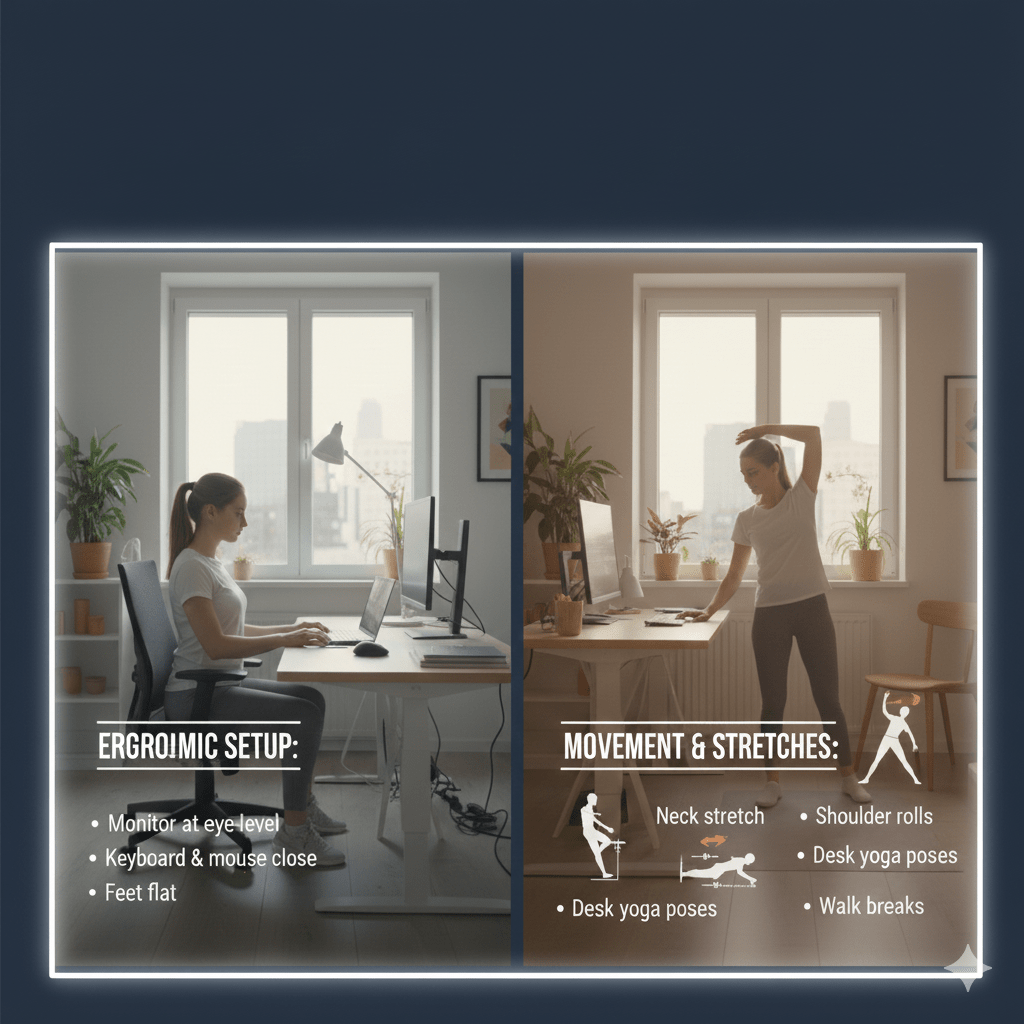
A chair should support the lower back. When the chair supports the spine, the worker does not need to hold themselves upright with constant muscle tension. The seat height should allow feet to rest on the floor or on a footrest. Knees should be roughly level with hips, not dramatically higher. A chair that is too low can force the pelvis to tilt backward and the spine to round.
Screen height also matters. When the screen is too low, the head drops forward. When the screen is at a comfortable height, the neck stays closer to neutral. The best setup is one where the eyes naturally look toward the top third of the screen without needing to crane the neck.
The keyboard and mouse should sit where the elbows can relax near the body. When the arms reach forward, the shoulders rise and tension builds. A worker who brings tools closer to the body often reduces upper back strain quickly.
This is one of the most effective well-being tips: reducing strain at the source makes movement breaks more effective.
Proper posture without perfection
Many people hear “good posture” and imagine rigid sitting. That can create more tension. Proper posture is more like a range than a single position. The goal is to avoid extreme slumping and extreme stiffness.
A helpful posture image is a stacked alignment: ears over shoulders, shoulders over hips. That does not mean the head never moves. It means the head is not constantly pushed forward. When the head is forward, the neck muscles work overtime. A small shift back toward neutral can reduce tension.
Another helpful idea is “support, then relax.” If the chair supports the back, the worker can relax some muscles rather than constantly bracing. The shoulders can drop. The jaw can loosen. The hands can stay light on the keyboard.
This is where the phrase “big difference” becomes real. Small posture changes repeated across a workday create a big difference over time.
The most important habit: regular breaks that are actually taken
Regular breaks are the backbone of healthy office habits. Many employees know they should take breaks, yet meetings and tasks fill the day. Breaks become more reliable when they are tied to triggers: a new email batch, the end of a call, a refill of water, or a calendar reminder.
A desk worker does not need long breaks to get results. A few minutes can help. Even a few seconds of changing position can reduce stiffness. The aim is frequent resets rather than rare long breaks.
In practical terms, this means taking mini-breaks: standing up for a few seconds, rolling shoulders, stretching the chest, or walking to fill a water bottle. Those micro habits lower risk from prolonged sitting.
Water and the “natural break” strategy
A water bottle is not only hydration. It is a strategy. Keeping a water bottle at the desk supports overall health, yet it also creates a reason to get up. Refilling water becomes a built-in break. Bathroom trips become built-in movement. Hydration supports energy, and it supports breaks without needing willpower.
This is a great way to turn a healthy habit into a daily routine. It also supports focus. Dehydration can increase fatigue and headaches, especially in long hours of screen time.
Neck and upper back habits that fit into a workday
Desk workers often feel neck stiffness because the head drifts forward. The muscles at the base of the skull tighten. The upper trapezius muscles tighten. The shoulders creep up.
One of the simplest resets is a gentle chin tuck. The worker brings the chin slightly back, as if making a soft “double chin,” while keeping the eyes level. This is not a harsh movement. It is a subtle correction. It brings the head back toward the spine and reduces load on the neck.
Another simple reset is shoulder blade retraction. The worker gently pulls the shoulder blades back and down, then relaxes. This counters rounded posture. It opens the chest and gives the neck muscles less work.
A third helpful movement is a chest opener stretch. Sitting rounds the shoulders forward. A short doorway stretch, or simply clasping hands behind the back and gently opening the chest, can reduce tension.
These movements should be gentle. Pain is a signal to stop and adjust. The goal is comfort, not strain.
Low back comfort: movement and hip position matter
Low back discomfort often comes from prolonged sitting combined with weak movement patterns during the day. Sitting compresses the hips and reduces glute activity. The low back can take extra load when the hips are stiff.
Standing up and walking for a few minutes helps. Hip flexor stretching can help. Gentle glute engagement can help. Many workers benefit from standing periodically, even without a standing desk.
A standing desk can be useful, yet standing all day is not the goal. The goal is variety: sit, stand, move, then sit again. A standing desk works best when it supports regular position changes rather than replacing sitting with static standing.
Quick desk exercises that support neck/back health
Desk exercises work best when they are simple, private, and easy to repeat. The best exercises are the ones a worker will actually do between tasks.
Leg lifts under the desk can activate hips and improve circulation. A worker can extend one leg, hold briefly, then switch sides. This is subtle and can be done during meetings.
Ankle pumps can reduce stiffness and support blood flow in long sitting stretches. Small calf raises while standing by the desk can also help.
Seated spinal twists can gently move the upper back. A worker can turn the torso slightly toward one side while keeping the hips facing forward, then switch sides. The movement should be gentle.
Standing hip hinges can reset posture. Standing tall, the worker hinges slightly at the hips while keeping a neutral spine, then returns. This teaches the body to use hips rather than collapsing into the low back.
These are not workouts. They are movement snacks that reduce negative effects from long hours.
Portable exercise equipment that can help without clutter
Portable exercise equipment can support desk workers when it stays simple. A resistance band can be used for shoulder and upper back work. A small massage ball can help release tension in the upper back. A small footrest can improve sitting posture. A laptop stand can improve screen height. A simple external keyboard can reduce shoulder strain by allowing the screen to be higher while keeping hands lower.
These tools are not required. They are optional additions that can make a desk job more comfortable. The biggest wins still come from regular breaks and posture awareness.
Eye strain and the neck connection
Eye strain often increases neck tension. When a person squints or leans forward, the head moves closer to the screen, increasing neck load. This is common in office workers who spend hours looking at spreadsheets or detailed documents.
A simple habit is to look away regularly. Shifting gaze to a far point relaxes eye muscles. This also encourages the head and neck to change position. Adjusting screen brightness, increasing font size, and improving lighting in the environment can reduce strain.
This is a well-being tip that often improves headaches and neck tension together.
Healthy habits for desk workers in the workplace: how employees can make it realistic
Healthy habits for desk workers in the workplace work best when they fit into the culture. If breaks are treated as laziness, employees will avoid them. If breaks are normalized, workers get healthier. A workplace wellness program can help by encouraging short breaks, providing ergonomic education, and allowing time for movement.
Managers can support healthier workplace habits by setting meeting norms: short breaks between meetings, ending meetings a few minutes early, or encouraging standing meetings for short topics. These small changes protect physical health and mental health.
This is not only about comfort. Prolonged sitting increases risk for health issues over time. Reducing that risk supports overall health, which supports productivity.
Wellness tips for employees that improve energy and focus
Wellness tips for employees often sound vague. In real life, the most useful tips are specific.
Energy improves when workers take short breaks and avoid long stretches of stillness. Focus improves when the brain gets small resets. A brief walk can improve attention. A short stretch can improve comfort, which improves concentration.
Food also matters. Healthy snacks help stabilize energy. Desk workers often skip meals, then overeat later. They often rely on sugary snacks that create a short spike then a crash. A simple shift toward protein and fiber snacks can help energy levels.
When meals are planned, the workday feels less chaotic. When hydration is steady, headaches reduce. These are small habits that support overall well-being.
Well-being tips that protect mental health at the desk
Mental well-being at work is affected by posture and movement more than many people realize. The body and mind are linked. A person who sits in a collapsed posture all day may feel more tired and less confident. Movement changes mood. Even a few minutes of walking can lower stress.
Work-life balance also matters. Desk workers often carry work mentally into the evening. A short shutdown routine at the end of the day helps. That routine can include a final task list for tomorrow, then closing the laptop and physically leaving the work area. This signals the brain that work is done.
This is a healthy way to reduce stress and improve sleep, which then improves energy the next day.
Meetings: how to stay healthy without looking disruptive
Meetings are a major barrier for desk workers. People feel trapped in a chair for hours. Yet small movement can still happen without drawing attention.
A worker can change sitting position occasionally. They can roll shoulders gently. They can do small ankle pumps. They can stand for a minute if the meeting culture allows it, especially on video calls. They can take short breaks between meetings when possible.
When meetings run back-to-back, health habits collapse. A workplace that allows a few minutes between calls protects workers’ bodies and improves productivity.
A sample daily routine for a desk worker
A healthy daily routine for desk workers begins with a posture check at the start of the day. The worker sets up the chair, screen, and keyboard. Then, throughout the workday, they use water as a movement trigger. Each refill becomes a short walk. Each bathroom trip becomes a movement break.
At mid-morning, a short stretch helps the neck and upper back. At lunch, a short walk resets hips and spine. In the afternoon, a short standing period or a few minutes of movement reduces the common slump.
At the end of the day, a short shutdown routine protects work-life balance. The worker closes tasks, plans tomorrow, and leaves the work mode behind.
This routine is not complicated. It is a set of habits tied to existing activities.
Risks of ignoring movement in desk jobs
Desk jobs often carry hidden risk. Prolonged sitting can contribute to weight gain, reduced circulation, hip stiffness, and low back discomfort. Poor posture can lead to neck issues and headaches. Eye strain can increase tension. Stress can rise when discomfort rises.
These negative effects add up. The goal of healthy habits is to reduce risk over time. It is to keep the body able and comfortable during working hours. It is to keep energy levels steadier.
When professional help is needed
Most desk discomfort improves with better posture, regular breaks, and gentle movement. Yet some signs suggest a need for professional support. Sharp pain, numbness, tingling down an arm or leg, or worsening symptoms deserve medical attention. A physical therapist can help identify specific movement issues and provide tailored exercises.
Desk workers should not ignore symptoms that persist or worsen. Early support often prevents longer-term problems.
Closing thought
Healthy habits for desk workers are built from small actions repeated across the workday: better posture, regular breaks, hydration, short movement, and a workplace environment that supports well-being. When desk workers protect their neck and back through simple movement and setup adjustments, they often feel a big difference in comfort, energy, and focus—without needing a complicated fitness plan.